Blood Sugar · 2 min read
Food Order and Short Walks After Meals: What the Research Suggests
Starting a meal with vegetables and protein, then taking a short walk, may soften the rise in blood sugar after you eat. Here is what the studies actually show, and what they do not.

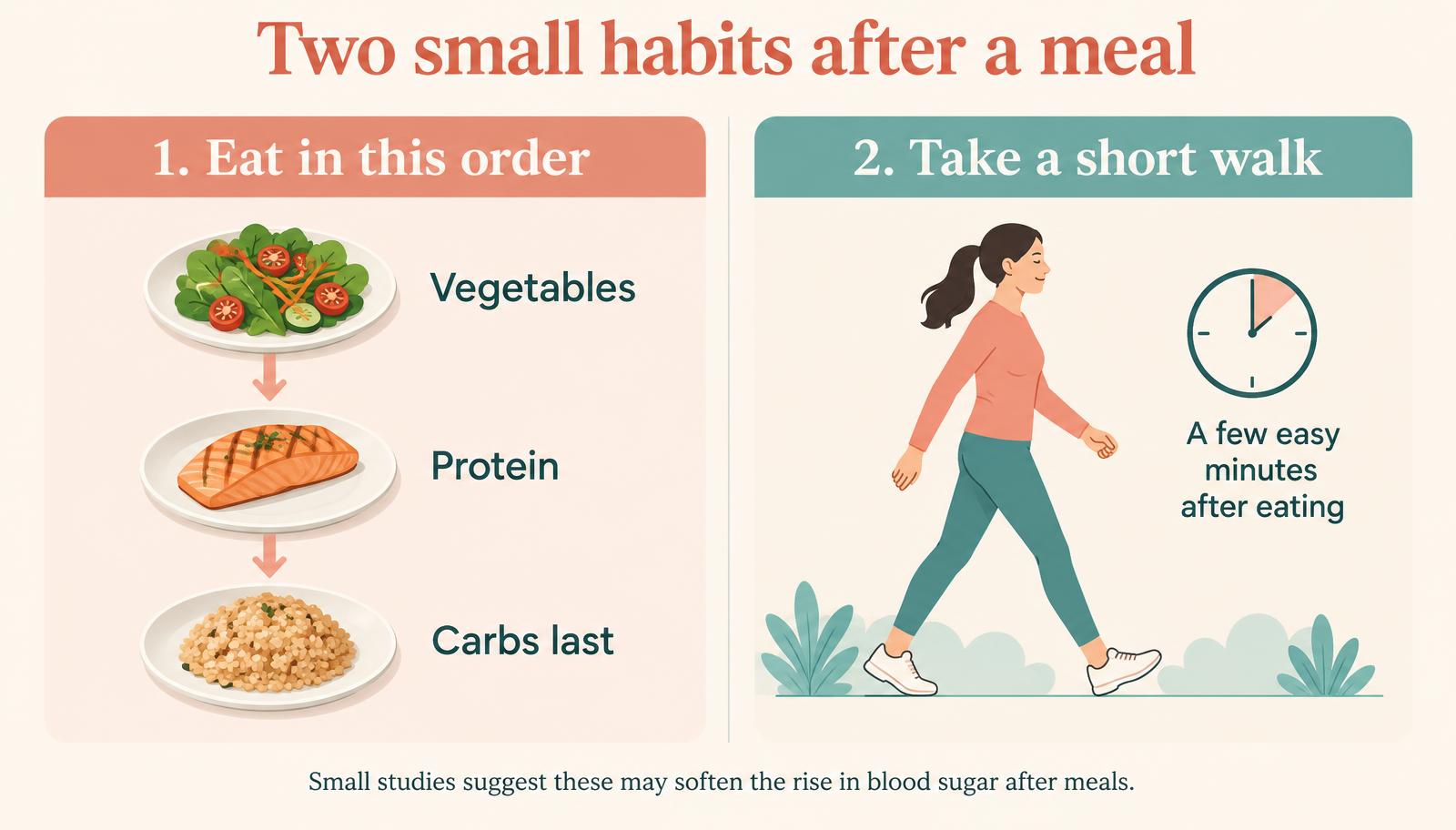
Two small habits, eating vegetables and protein before carbohydrates and walking for a few minutes after a meal, have research behind them for lowering blood sugar after eating, but the studies are small and short. They are worth trying. They are not magic.
Food order: what the studies found
In a 2015 pilot study, 11 adults with type 2 diabetes who took metformin ate the same meal twice, once with carbohydrates first and once with vegetables and protein first. Blood sugar after the meal was about 29%, 37% and 17% lower at 30, 60 and 120 minutes when the carbohydrates came last (Shukla et al., Diabetes Care, 2015). A follow-up study of 15 people with prediabetes also found lower glucose and insulin responses when vegetables and protein came first (Shukla et al., Diabetes Obesity and Metabolism, 2019).
What this does not tell us: whether the effect holds for women without diabetes, whether it lasts over months, or whether it changes weight or cravings. Participants were small groups, and the measurements were taken after a single meal.
They are worth trying. They are not magic.
Short walks: what the studies found
A 2022 meta-analysis of seven studies compared sitting with standing breaks and light-intensity walking breaks. Light walking lowered blood sugar and insulin after meals compared with continuous sitting, and standing helped a little too (Buffey et al., Sports Medicine, 2022). The breaks in those studies were short, about 2 to 5 minutes, and spread across the day.
What this does not tell us: the studies tested breaking up sitting in general, not only after meals, and they measured short-term glucose, not long-term health.
How to try both this week
- Start lunch or dinner with the vegetables and protein on your plate. Finish with the carbohydrates.
- After you eat, stand up and walk for a few minutes. A lap of the house or a trip to the mailbox counts.
- Notice your energy two hours later. That is your data.
A note on perfection
You do not need to eat in a strict order at every meal or walk after every bite. If these habits make eating feel stressful or rigid, drop them. Food should not feel like a test.
For the bigger picture, read Blood Sugar After 40.
Listen
Hear Simone talk about this on the podcast

Episode 6 · 9 min
Let's Get Off The Blood Sugar Roller CoasterEpisode 107 · 40 min
The Real Reason You’re Tired, Craving Sugar & Gaining Weight
Frequently asked questions
Does eating vegetables and protein before carbs lower blood sugar?
In small studies of people with type 2 diabetes and prediabetes, blood sugar after a meal was lower when vegetables and protein were eaten before carbohydrates. The studies are small and short, and results for women without diabetes are unknown.
How long should I walk after a meal?
The studies in a 2022 meta-analysis used short light walking breaks of about 2 to 5 minutes. Any gentle movement is a reasonable place to start.
Will these habits help me lose weight?
The studies measured blood sugar after meals, not weight. Treat them as small supportive habits, not weight-loss tools.
Sources
- Food order has a significant impact on postprandial glucose and insulin levels. Diabetes Care, 2015.
- The impact of food order on postprandial glycaemic excursions in prediabetes. Diabetes, Obesity and Metabolism, 2019.
- The acute effects of interrupting prolonged sitting time with standing and light-intensity walking on biomarkers of cardiometabolic health: a systematic review and meta-analysis. Sports Medicine, 2022.
Curious what your body needs now?
Take a few minutes to learn which habits could help you most in this season.
Join the Boost Lab waitlistThis is education, not medical advice. Talk to your healthcare provider before changing your nutrition, exercise or medication.