Blood Sugar · 2 min read
The 3pm and 9pm Craving Cycle, Explained
If you can set your watch by your afternoon and evening cravings, you are not weak. Here are the common contributors, an honest look at what blood sugar can and cannot explain, and a one-week experiment.
If you can set your watch by a craving at 3pm and again at 9pm, there is usually more than one thing going on. Blood sugar may play a part for some women, but it is not the only explanation, and it is not proven that a "crash" is the cause. Here is how to find your own pattern.
Common contributors
- Long gaps and light meals. A small lunch with little protein can leave you hungry by mid-afternoon.
- Tired body, bigger appetite. Short or broken sleep makes quick energy foods more appealing, and perimenopause often breaks sleep up.
- Stress and the end of the day. After a day of holding it together, evening is when many women finally exhale, and food becomes the exhale.
- Habit and cues. The time on the clock, the couch, the TV, the pantry. Cravings often follow the cue, not the hunger.
- Blood sugar. Glucose rises and falls after meals, and some women feel hungrier or flatter as it drops. A 2026 review reminds us that normal fluctuations are easy to overinterpret (Dower et al., JAMA Internal Medicine), so treat it as one clue.
I used to always want something sweet in the afternoon, and definitely after dinner. Once I started wearing a CGM and following a low-glycemic menu plan built to keep my blood sugar steadier, my cravings dropped off within days, and today they are a non-issue for me. I hear similar stories in our community, though everyone is different.
A one-week experiment
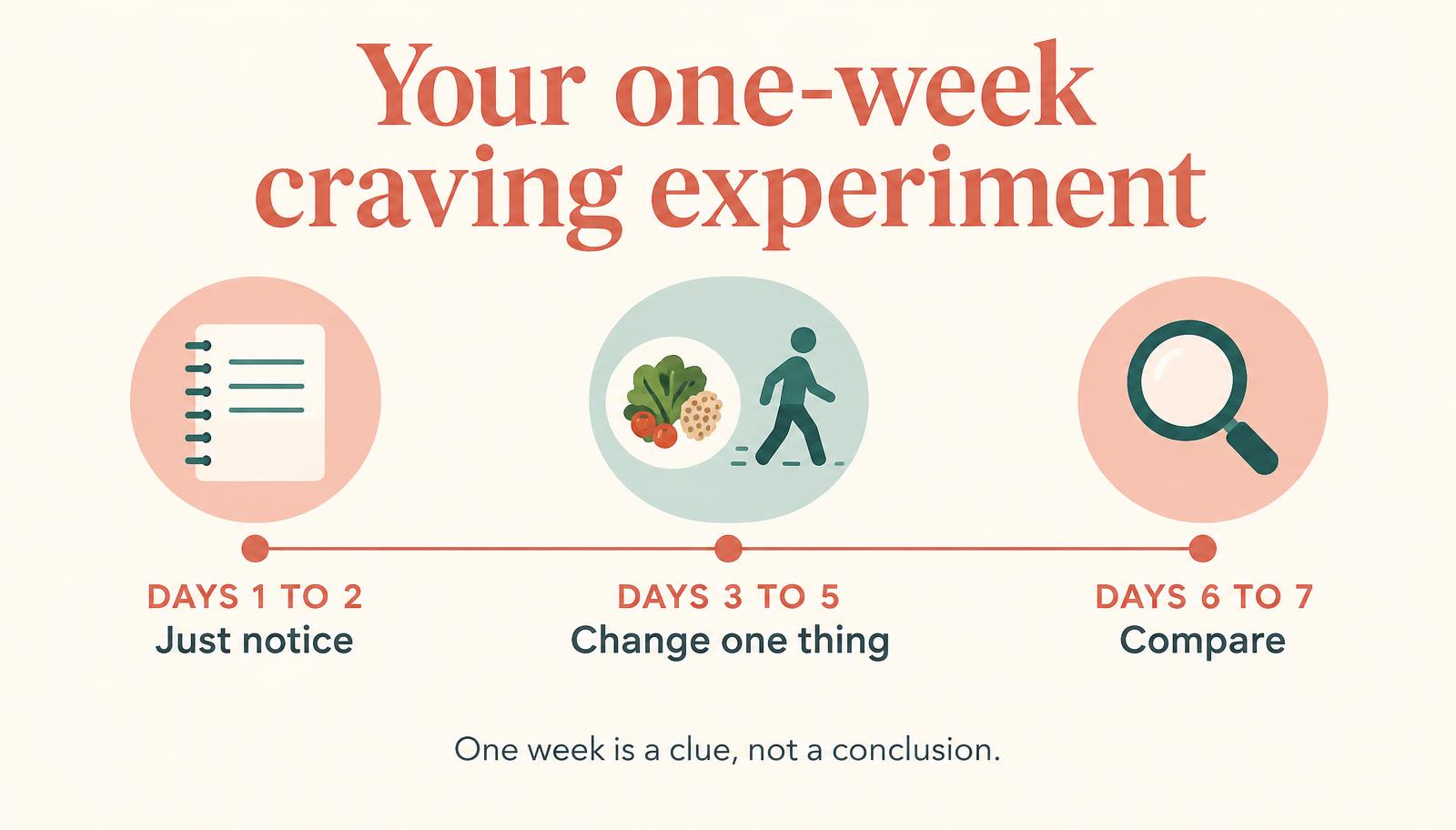
- Days 1 to 2: just notice. Write down the time, what you ate before, how you slept, your stress, and how strong the craving was from 1 to 10.
- Days 3 to 5: change one thing. Make lunch protein-forward, and start it with the vegetables and protein before the carbohydrates. Small studies suggest this order lowers blood sugar after a meal compared with carbohydrates first (Shukla et al., 2015).
- Days 3 to 5: add a short walk after lunch. Light walking breaks lowered post-meal blood sugar compared with sitting in a meta-analysis of short studies (Buffey et al., 2022).
- Days 6 to 7: compare. Did the craving change in timing or strength? One week is a clue, not a conclusion.
One week is a clue, not a conclusion.
If cravings feel out of control
If cravings come with loss of control, bingeing, guilt, or secrecy, please talk to a healthcare professional. That is not a willpower problem, and you deserve proper support.
Want a plan built around your own patterns? Start with our complete guide to blood sugar after 40.
Listen
Hear Simone talk about this on the podcast

Episode 107 · 40 min
The Real Reason You’re Tired, Craving Sugar & Gaining WeightEpisode 6 · 9 min
Let's Get Off The Blood Sugar Roller Coaster
Frequently asked questions
Why do I crave sugar at 3pm?
There is rarely one cause. Common contributors include a light lunch, poor sleep, stress and habit cues. Blood sugar may play a part for some women, but a crash is not proven to be the cause.
Why are my cravings worse at night?
Evening is when many women finally relax after a stressful day, and food can become the way they unwind. Tiredness and habit cues also play a role.
Will eating protein stop my cravings?
It may help some women feel more satisfied, but it is not a guarantee. Run a one-week experiment and see what changes for you.
When should I talk to a professional about cravings?
If cravings come with loss of control, bingeing, guilt or secrecy, talk to a healthcare professional.
Sources
- Continuous glucose monitoring in type 2 diabetes and beyond: a review. JAMA Internal Medicine, 2026.
- Food order has a significant impact on postprandial glucose and insulin levels. Diabetes Care, 2015.
- The acute effects of interrupting prolonged sitting time with standing and light-intensity walking on biomarkers of cardiometabolic health: a systematic review and meta-analysis. Sports Medicine, 2022.
More in this guide
Curious what your body needs now?
Take a few minutes to learn which habits could help you most in this season.
Join the Boost Lab waitlistThis is education, not medical advice. Talk to your healthcare provider before changing your nutrition, exercise or medication.